In narrow web label production, die-cutting quality directly affects finished roll usability, waste rates, and downstream converting efficiency. Even when print quality is excellent, poor die-cutting performance can compromise the entire job. Curing technology plays a decisive role in how inks, coatings, and adhesives behave during this process.
LED UV curing has become increasingly relevant because it alters ink film structure, surface energy, and thermal behavior. These changes create measurable advantages during rotary die-cutting in flexographic and letterpress label printing.
Relationship Between Curing Method and Die-Cutting Performance
Die-cutting requires precise control of ink hardness, elasticity, and adhesion to the substrate. Over-cured or under-cured ink layers increase cutting resistance and raise the risk of edge cracking or liner damage.
Traditional mercury UV systems expose the printed web to high radiant heat and broad-spectrum energy. This can overheat substrates and create uneven ink crosslinking. LED UV curing delivers targeted energy that promotes uniform polymerization while limiting thermal side effects.
This controlled curing profile is a key reason why die-cutting becomes more stable when LED UV is used in narrow web presses.
Lower Heat Improves Dimensional Stability
Excess heat is one of the main contributors to die-cutting inconsistency. When films or paper liners absorb heat, they expand or deform before reaching the die station. Even small dimensional changes affect cutting depth and registration.
LED UV curing generates minimal infrared radiation. Substrate temperature remains stable throughout the press path. As a result, web tension and dimensions are more consistent at the die-cutting unit.
In flexographic label printing, this stability supports accurate kiss-cutting, especially on thin liners and unsupported films.
Ink Film Structure and Cutting Cleanliness
LED UV curing promotes a dense and uniform ink film structure. Because energy is concentrated at specific wavelengths, photoinitiators react efficiently across the ink layer thickness.
This uniform crosslinking creates an ink surface that resists tearing during cutting. Rotary dies encounter less variable resistance, which improves edge sharpness and reduces micro-chipping.
In contrast, uneven curing can create soft zones or brittle areas that interfere with clean separation during die-cutting.
Reduced Ink Smearing at the Die Station
Ink smearing during die-cutting is often linked to residual tack or incomplete surface cure. This is especially problematic in high-speed narrow web production.
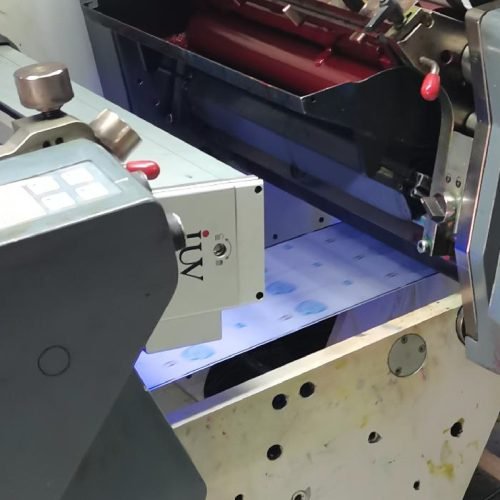
LED UV curing achieves rapid surface cure without overheating the ink film. The printed image reaches the die station with stable surface hardness. This reduces ink pickup on the die and minimizes cleaning interruptions.
For label converters, fewer die cleanings translate directly into higher uptime and consistent output quality.
Improved Adhesive Performance During Cutting
Pressure-sensitive labels rely on precise interaction between ink, facestock, and adhesive. Excess heat from conventional UV systems can soften adhesives prematurely. This increases drag during cutting and raises the risk of liner damage.
LED UV curing limits heat transfer to the adhesive layer. Adhesive properties remain stable until after die-cutting. This allows smoother web transport and cleaner matrix removal.
In narrow web presses running complex label constructions, this thermal control is a major operational advantage.
Cleaner Matrix Stripping and Waste Removal
Matrix stripping efficiency depends on how cleanly the label is cut and how the waste matrix behaves. Overheated substrates and soft ink films increase matrix stretch and breakage.
LED UV curing supports clean cutting lines and maintains substrate stiffness. The waste matrix releases predictably from the liner, even at higher press speeds.
This benefit is especially noticeable in dense label layouts or small label formats common in pharmaceutical and cosmetic applications.
Consistent Cutting Depth Across the Web Width
Die-cutting consistency across the web width is influenced by substrate flatness and ink build-up. Heat-induced curling or uneven curing can cause localized variations in cutting depth.
Because LED UV systems produce uniform energy output and low thermal load, web flatness is preserved. Ink build remains consistent across the width.
This uniformity simplifies die setting and reduces the need for frequent depth adjustments during production.
Advantages in High-Speed Flexographic Printing
As press speeds increase, the margin for error at the die station decreases. Any instability in ink cure or substrate temperature becomes more pronounced.
LED UV curing supports high-speed operation by delivering instant cure without thermal lag. The printed web reaches the die station in a predictable condition, even during long runs.
For converters pushing throughput limits, this reliability helps maintain cutting quality without sacrificing speed.
Benefits for Filmic and Specialty Substrates
Films, foils, and coated papers are more sensitive to heat than standard paper stocks. Conventional UV systems often limit cutting quality on these materials due to deformation.
LED UV curing allows converters to process specialty substrates with confidence. Reduced heat exposure preserves material properties and supports precise cutting geometry.
This expands material options for label designers while maintaining efficient converting performance.
Reduced Tool Wear and Maintenance
Die wear is influenced by cutting resistance and contamination. Softer or smeared ink films increase friction and accelerate blade wear.
With LED UV curing, ink surfaces are fully set and stable. Cutting resistance is consistent, which reduces mechanical stress on rotary dies.
Over time, this contributes to longer die life and lower tooling costs for narrow web operations.
Integration with Modern Narrow Web Press Layouts
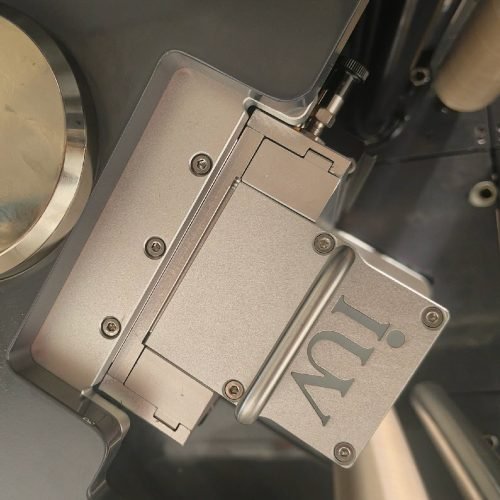
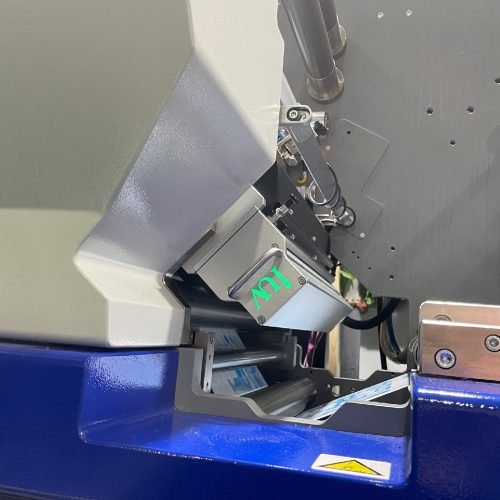
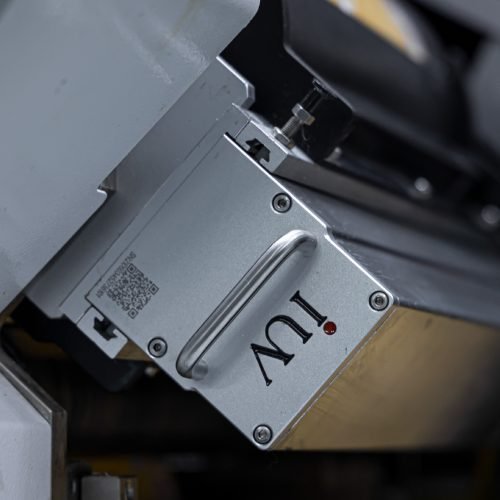
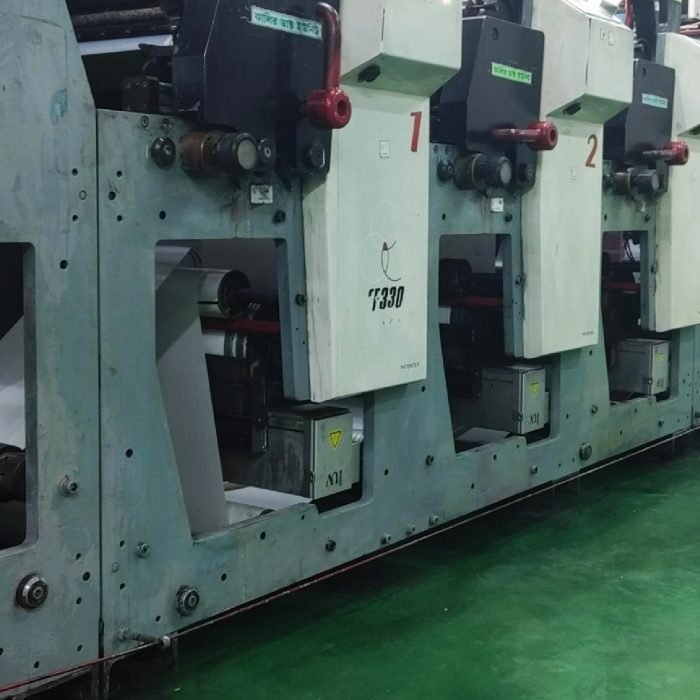
LED UV systems are compact and easy to position close to print stations. This short distance between curing and die-cutting minimizes environmental exposure and process variation.
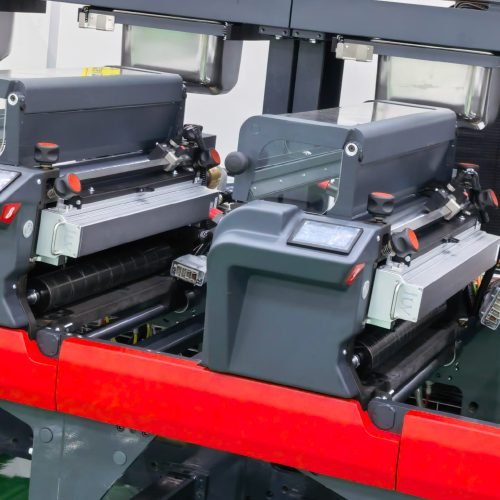
Modern flexo and letterpress presses benefit from this integration by achieving tighter process control from print to cut.
The result is a streamlined workflow that supports both print quality and converting efficiency.
Practical Value for Label Converters
For label converters, easier die-cutting means less waste, fewer stops, and more predictable production. LED UV curing contributes to these outcomes by stabilizing ink, substrate, and adhesive behavior.
Rather than treating curing and die-cutting as separate steps, LED UV technology aligns them into a coordinated process. This alignment is a key factor in achieving reliable, high-quality label production.
Process Consistency as a Competitive Advantage
In competitive label markets, consistency is as important as speed. LED UV curing helps converters maintain stable die-cutting conditions across different jobs and materials.
By reducing heat-related variables and improving ink film integrity, LED UV systems support repeatable results. This consistency strengthens overall process control in narrow web printing environments.