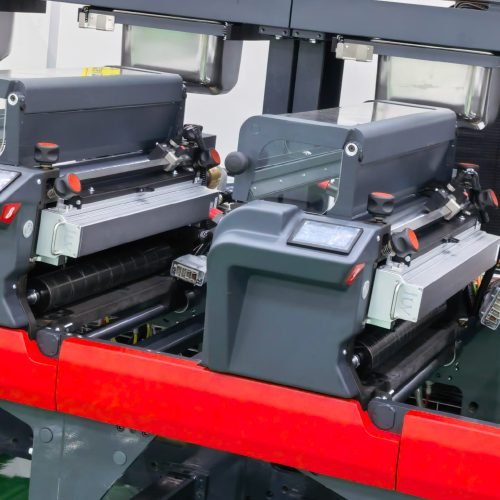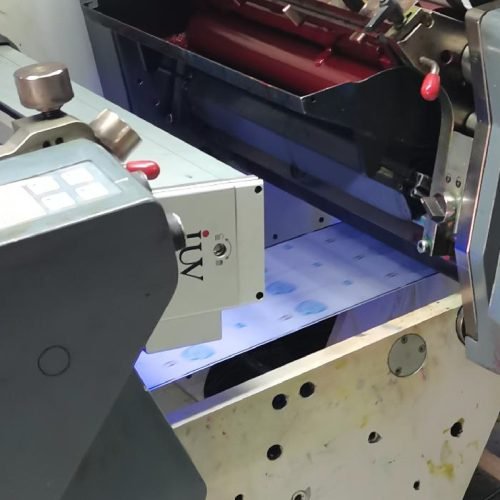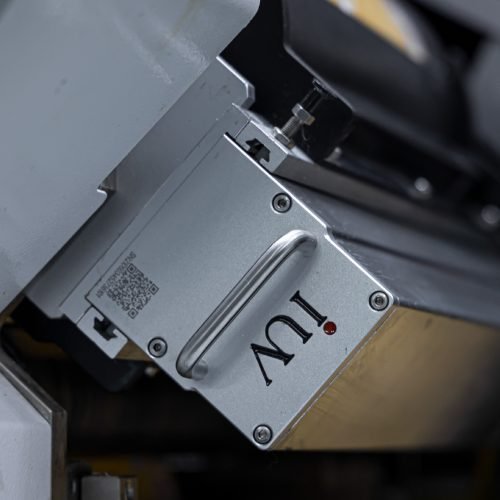
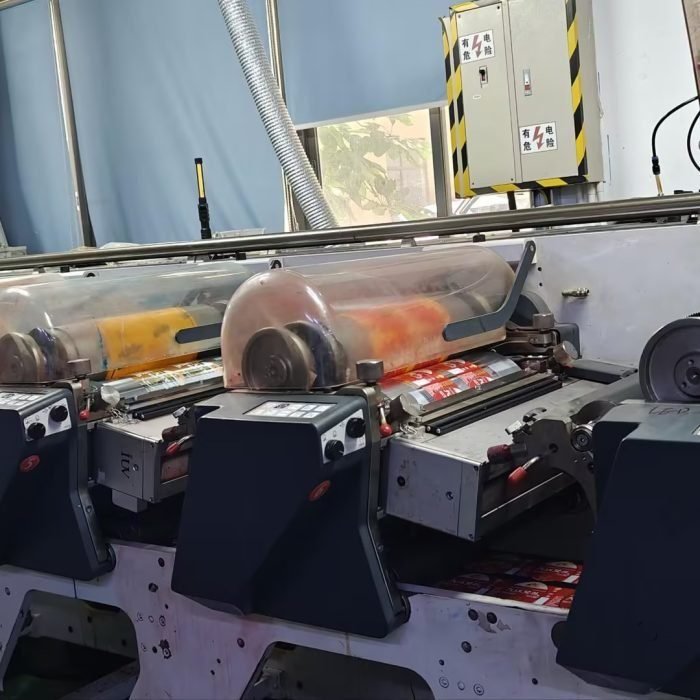
Integrating LED UV curing technology into OMET flexo presses has revolutionized narrow web label production by combining efficiency, consistency, and superior print quality. By leveraging precise LED output, presses can achieve faster curing, improved adhesion, and more stable multi-color registration while reducing energy consumption and downtime. Understanding the interplay between ink formulation, substrate behavior, and LED performance is essential to fully realize these productivity gains.
LED UV Technology Fundamentals
LED UV systems emit in the 365–405 nm spectrum, activating photoinitiators in UV-curable inks without producing excessive heat. This enables substrates, including sensitive papers and synthetic films, to maintain dimensional stability during high-speed printing. OMET presses benefit from uniform irradiance across the web, which is critical to maintain consistent dot gain, color density, and surface finish. LEDs also allow for instant on/off cycles, eliminating warm-up times associated with traditional mercury lamps and supporting faster job changeovers.
Impact of Substrate Characteristics
Substrate choice affects both curing efficiency and print quality. Materials like BOPP, PET, or coated papers have unique surface energies and optical properties, influencing how UV energy is absorbed. Highly opaque or metallic inks require careful calibration of LED intensity to achieve complete polymerization. By adjusting LED output according to substrate properties, OMET presses maintain adhesion, gloss uniformity, and accurate color reproduction throughout long production runs.
Ink Formulation and Compatibility
UV-curable inks designed for narrow-spectrum LEDs are critical to achieving reliable curing. Photoinitiators must align with the LED emission spectrum to prevent undercuring or adhesion issues. In multi-color flexo operations, interactions between sequential layers can further complicate curing, making careful ink selection essential. OMET presses benefit from inks engineered for fast polymerization and predictable wet-on-wet behavior, enabling high-speed production without sacrificing print quality.
Optimizing LED Module Placement
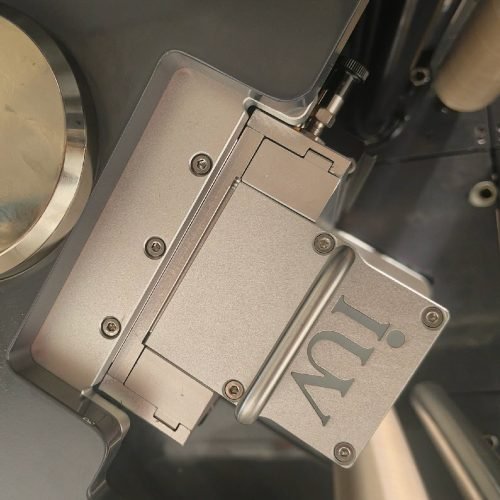
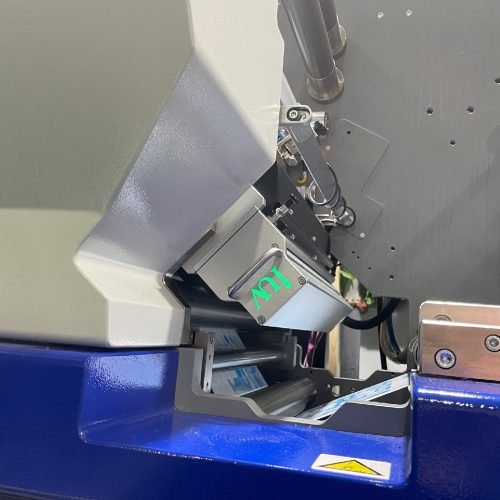
The physical arrangement of LED modules on an OMET flexo press directly affects curing uniformity. Module height, angle, and alignment must be precise to prevent gloss variations and banding across the web. Irradiance mapping with UV meters allows operators to detect low-output zones and adjust modules accordingly. Ensuring even energy distribution is especially important for high-resolution label printing where fine screens and small text elements demand consistent curing.
Mechanical Stability and Web Control
Web tension, roller alignment, and press mechanics play a critical role in curing consistency. Variations in tension or misaligned rollers can lead to uneven polymerization, adhesion failure, and print defects. Regular maintenance and calibration of mechanical systems ensure that the LED modules maintain the optimal distance from the substrate, preserving both ink performance and substrate integrity during continuous production.
Enhancing Multi-Color Wet-on-Wet Flexo
In multi-color wet-on-wet printing, each layer of ink must achieve sufficient polymerization before the next is applied. Inadequate curing can lead to interlayer contamination, adhesion failure, or color misregistration. OMET presses equipped with calibrated LED UV modules allow precise control of curing intensity and dwell time for each color station. This approach ensures that high-speed label production maintains consistent vibrancy, sharpness, and dimensional stability.
Real-Time Monitoring and Feedback
Monitoring LED output in real time is essential to sustain productivity and quality. UV sensors and irradiance meters allow operators to track lamp performance, detect degradation, and adjust intensity as needed. Integrating feedback systems with press controls supports dynamic adjustments for varying ink types, substrate changes, and production speeds. This ensures consistent curing across long production runs while reducing downtime and rework.
Troubleshooting Common Challenges
Even with advanced LED UV systems, challenges such as gloss variation, banding, or incomplete curing can occur. These issues often stem from misaligned modules, substrate inconsistencies, or ink incompatibility. Systematic troubleshooting involves checking LED performance, verifying ink formulations, inspecting substrates, and recalibrating press parameters. OMET presses offer modular flexibility, enabling operators to address issues quickly and maintain consistent print quality.
Energy Efficiency and Operational Benefits
LED UV integration significantly reduces energy consumption compared to traditional mercury lamps. Minimal heat generation reduces cooling needs, protects heat-sensitive substrates, and extends ink shelf life. Rapid start-up, instant on/off capability, and lower maintenance requirements allow OMET presses to operate efficiently across multiple jobs. These operational advantages translate to higher throughput, improved product quality, and reduced production costs.
Conclusion
OMET flexo presses equipped with LED UV curing technology demonstrate how advanced curing strategies enhance productivity without compromising print quality. By aligning LED output with substrate properties and ink chemistry, maintaining precise mechanical control, and utilizing real-time monitoring, narrow web converters achieve reliable, high-quality label production. The integration of LED UV modules supports faster throughput, consistent adhesion, superior color fidelity, and operational efficiency, positioning OMET presses as a benchmark for modern flexographic printing.